Get in Touch

Digital Solutions for Mid-Sized Companies

Your company is growing, but your digital processes are holding you back? We help mid-sized companies use well-thought-out digital solutions to work more efficiently and stay future-proof.

Whether website, internal tools or digital customer processes: we analyze your workflows, identify potential and develop applications tailored to them.

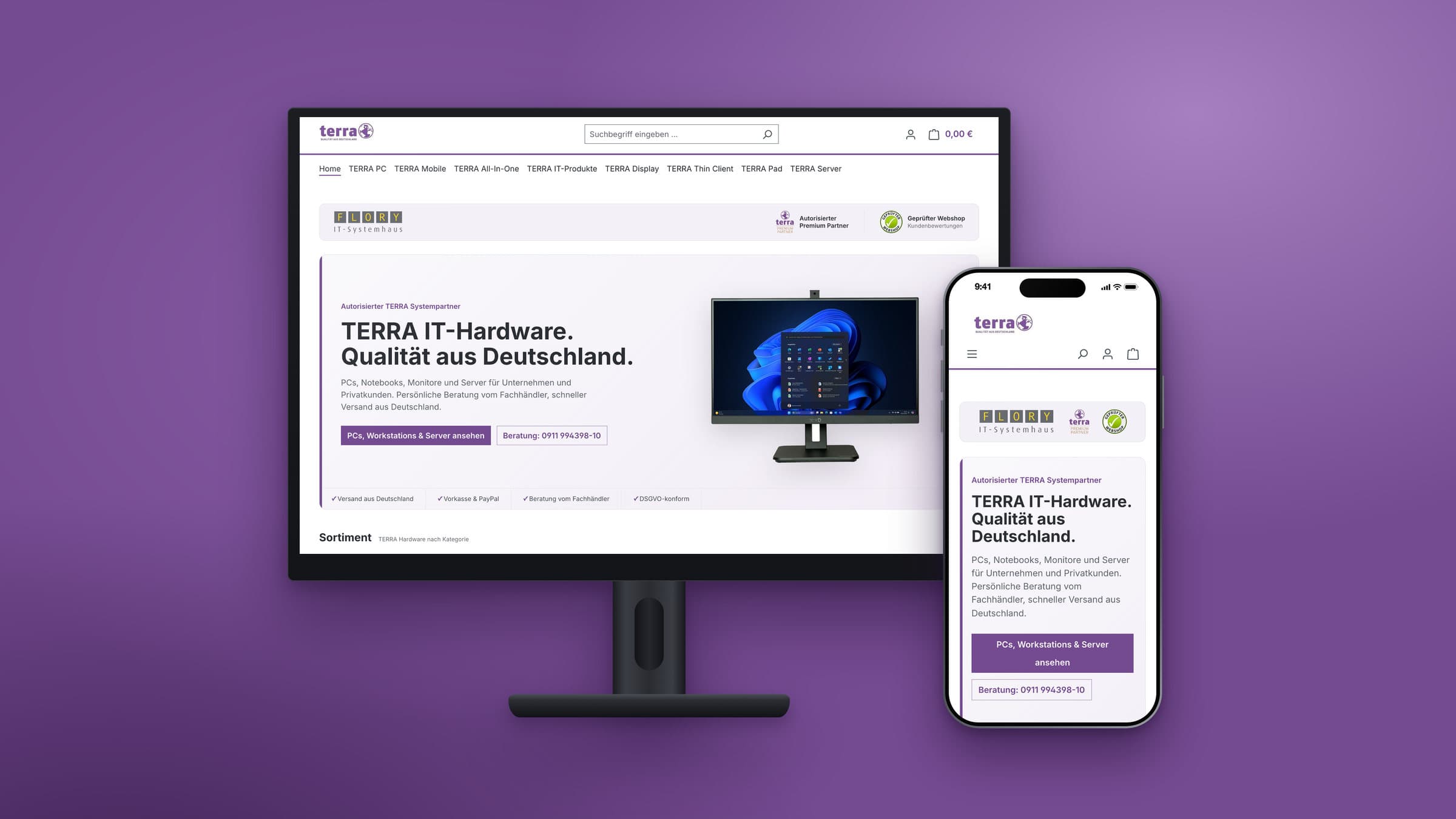
You can find an example in our project for HDI Fürth.

Suitable for
Mid-sized companies and SMEs that want to work in a more digital, efficient and customer-oriented way, without complex IT setups.
Spectrum
Web tools, customer portals, interfaces, automated workflows, digital services and custom-developed solutions for process optimization.
Details
We approach digital solutions in a practical, efficient and sustainable way: from the idea through implementation to long-term further development.

Problem

Outdated processes or a lack of digital infrastructure lead to inefficiency, unnecessary costs and competitive disadvantages.

Solution

We develop digital solutions that simplify processes, relieve employees and create new digital customer experiences.

Where the need becomes visible in daily operations

The need rarely shows up in IT. It shows up in the way work gets done. The same order is entered three times: once in an inbox, once in a spreadsheet, once in the ERP. Quotes come from a template that every salesperson has saved in a slightly different version. A form gets filled in as a PDF, printed, signed, scanned and sent back.

A second pattern is dependency on individuals. One colleague knows the spreadsheet with the macros and nobody else does. When she is away, the process stops. A third shows at the edges: customers send data by email that someone retypes into a system, suppliers receive lists assembled by hand from two sources.

The assessment only becomes solid with numbers from your own operation. How many of these cases run per week, how long does one take, how often does something have to be corrected, what does an error cost. That order of magnitude decides whether a custom application pays off or whether a better template plus one clear owner already removes most of the problem.


From process to application, in manageable steps

We start with the people who run the process, not with management alone. What gets recorded is the actual sequence including every special case, because the exceptions are what drive the effort later. Out of that comes a scope: one bounded area that is useful on its own and produces a measurable effect, instead of a programme that delivers nothing for years.

Two questions have to be settled early. First, off the shelf software or a custom build. If an existing product covers the case, it is usually the cheaper answer, even when the process has to bend to fit it. A custom build pays off where that exact workflow is what sets you apart. Second, the connections: which systems have to send or receive data, does a documented interface exist for them, and who at the vendor switches it on.

From you we need access, real test data and people from the department who review the work. Plus a decision on who grants permissions after launch, who reports faults and who approves extensions. Without that ownership an application stays a project and never becomes a tool.

Why digitalization projects fail in mid-sized companies

The most expensive mistake is mapping an unresolved workflow one to one. The software then freezes a practice that grew out of workarounds. So the question of which steps are needed at all belongs before the build. More usually drops out than gets added.

The second point is data. Master records maintained differently across three systems make every report contestable and every automation unreliable. That applies with particular force to anything involving AI: without consolidated, maintained data there is no usable result, whichever model you put on top.

Operations get underestimated as well. An application needs updates, backups, someone to call and adjustments whenever the process changes. Plan only the rollout and you own a new legacy system before long. And not every problem is a software problem: if two departments pursue different goals, or a rule was never actually decided, an application will not fix it. It only makes the conflict more visible, usually at the point where the data refuses to line up.

Related services

  • FWB Logo
  • Justdentit Logo
  • Koerperfit Logo
  • WFN Logo
  • FWB Logo
  • Justdentit Logo
  • Koerperfit Logo
  • WFN Logo

References

Case Studies

Ready for Your Next Project?

Write to us or book an initial consultation directly. We reply within 24 hours, usually faster on weekdays.

Start Project Now