
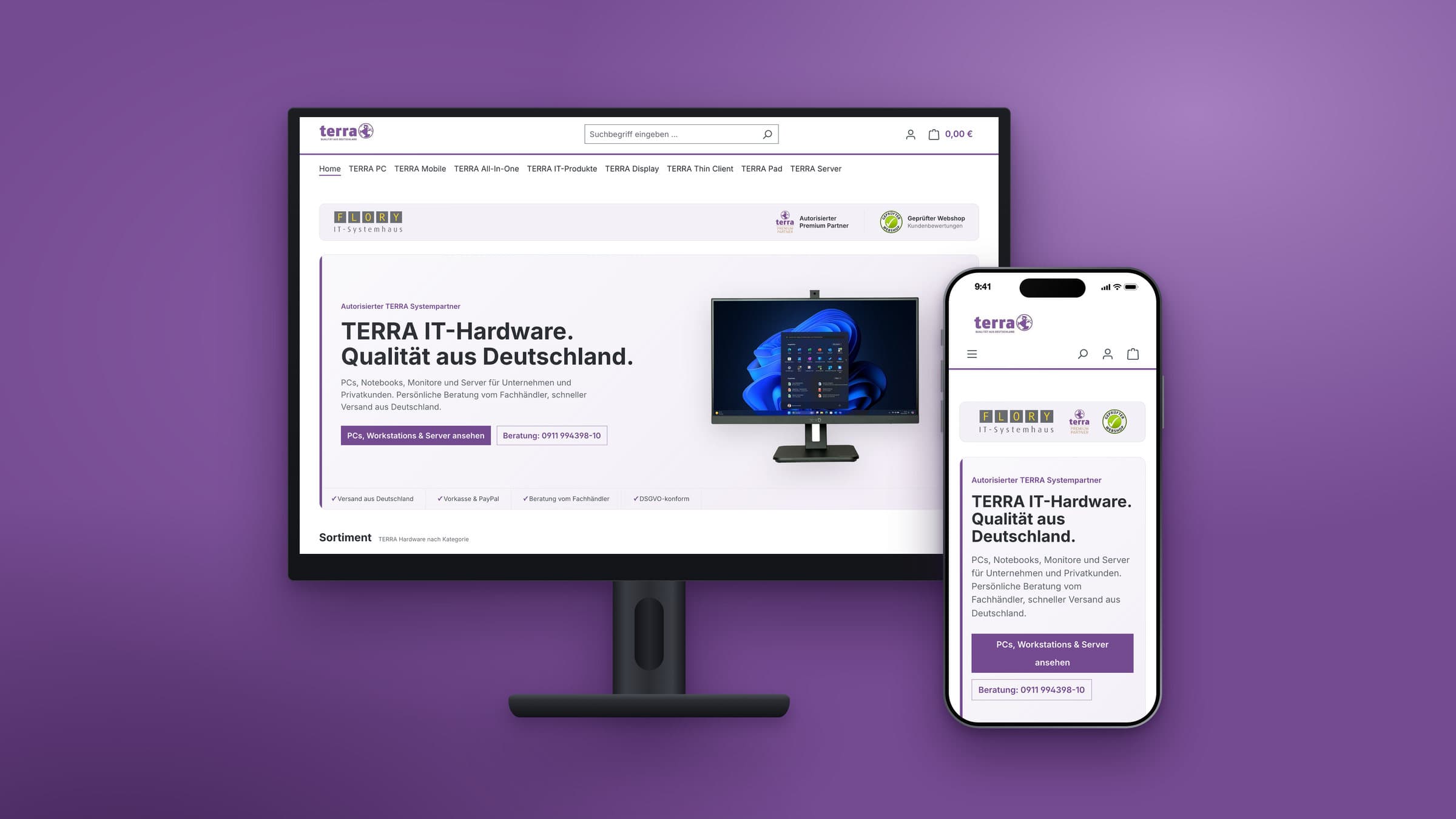
FLORY IT-Systemhaus is an authorised TERRA partner and sells computers, notebooks, monitors and servers made by WORTMANN through terra-pc-shop24.de. Until recently the shop ran on Magento 1, which Adobe stopped supplying with security updates in 2020. We moved it to Shopware 6 and rebuilt product maintenance along the way: the manufacturer data is uploaded, and the shop turns it into prices, stock levels, images, filters and data sheets.
Move from Magento 1 to Shopware 6 with a custom theme in the TERRA colours, just over 300 redirects from the old addresses and structured product data for Google. Importer for the manufacturer data with a preview in the Shopware admin, ten filter groups, EU energy labelling for monitors, linked accessories, and Google Tag Manager with Consent Mode.
The focus was on product maintenance. For every device the manufacturer supplies a technical data table with several dozen attributes, yet the old shop offered no way to filter by them. Now that table becomes a filter in the category, a chip on the product tile and a data sheet on the product page.
Payment is by prepayment or PayPal, delivery within Germany. Invoices and delivery notes carry the retailer's own layout and logo. Measurement only starts after consent, via Google Tag Manager in Consent Mode v2.
WORTMANN provides its retailers with two files: one with prices, stock levels and delivery dates, one with descriptions, images and technical data. Stock changes daily, the range changes with every device generation. Anyone who copies that into a shop by hand takes on a permanent task that is never quite finished.
The importer merges both files, assigns the items to the categories of the shop and links accessories and similar devices. Before each run it shows a preview in the Shopware admin: which items are new, which have changed in price or stock, and which the manufacturer no longer lists. Only then does the import start.
If an item is missing from the manufacturer file, it is deactivated rather than deleted. When the model returns, the next import brings it back with the same address and the same images. The comparison only covers TERRA items. Anything FLORY creates itself is left untouched.
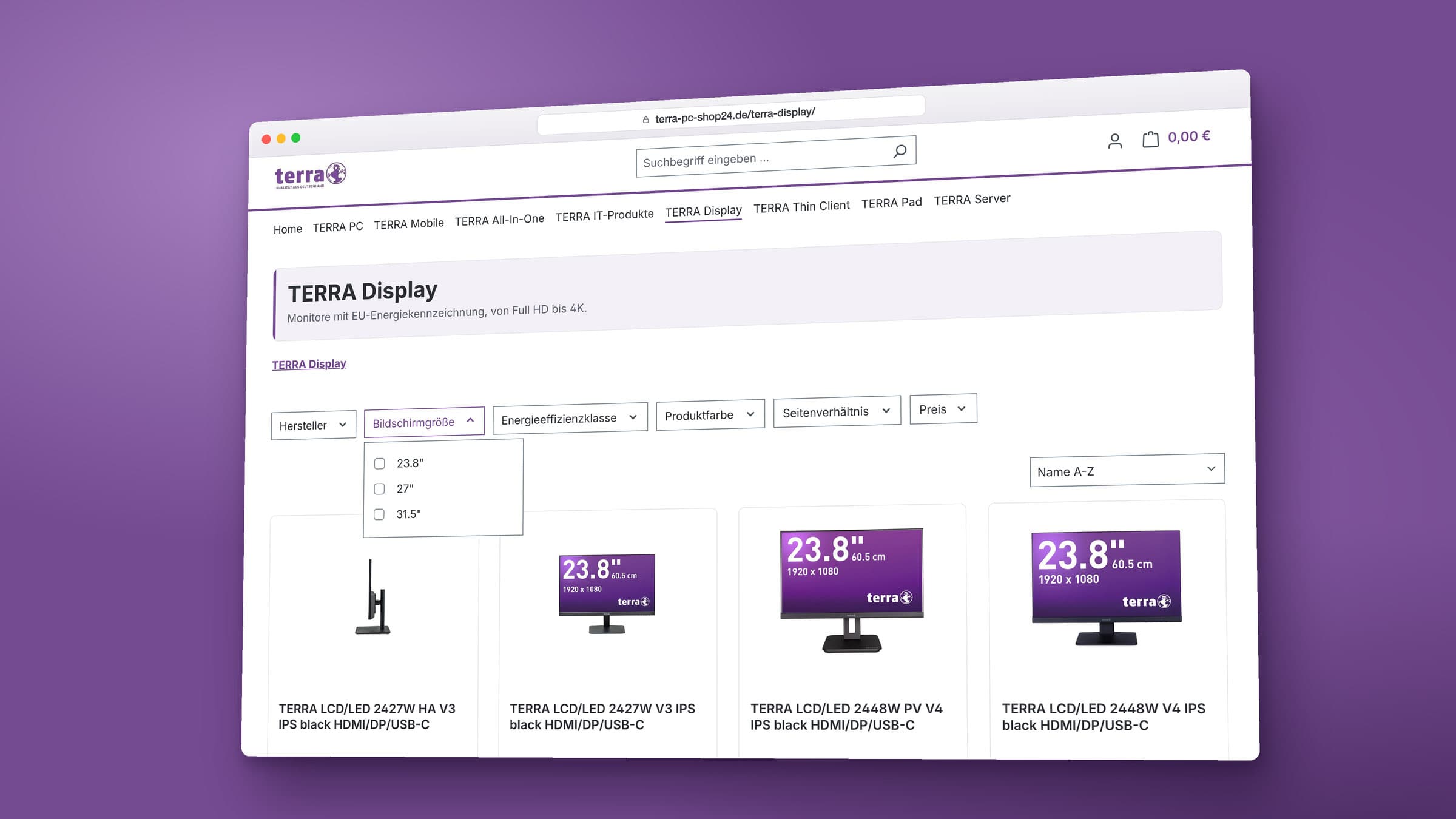
The manufacturer data table covers several dozen attributes per device, from processor family to noise level. Only some of them work as filters. What matters is how buyers in IT retail actually choose: processor, memory, SSD and operating system, and for monitors size, aspect ratio and energy efficiency class. That became ten filter groups, and each category only shows the ones that make sense for its devices.
The real work lies in the values. The same specification appears in the file in several spellings, sometimes as 1000 GB, sometimes as 1 TB, the operating system sometimes with an addition and sometimes without. Taken over unchecked, every variant would become its own entry in the list, and anyone clicking 1 TB would only find some of the matching devices. So the importer normalises the values before storing them.
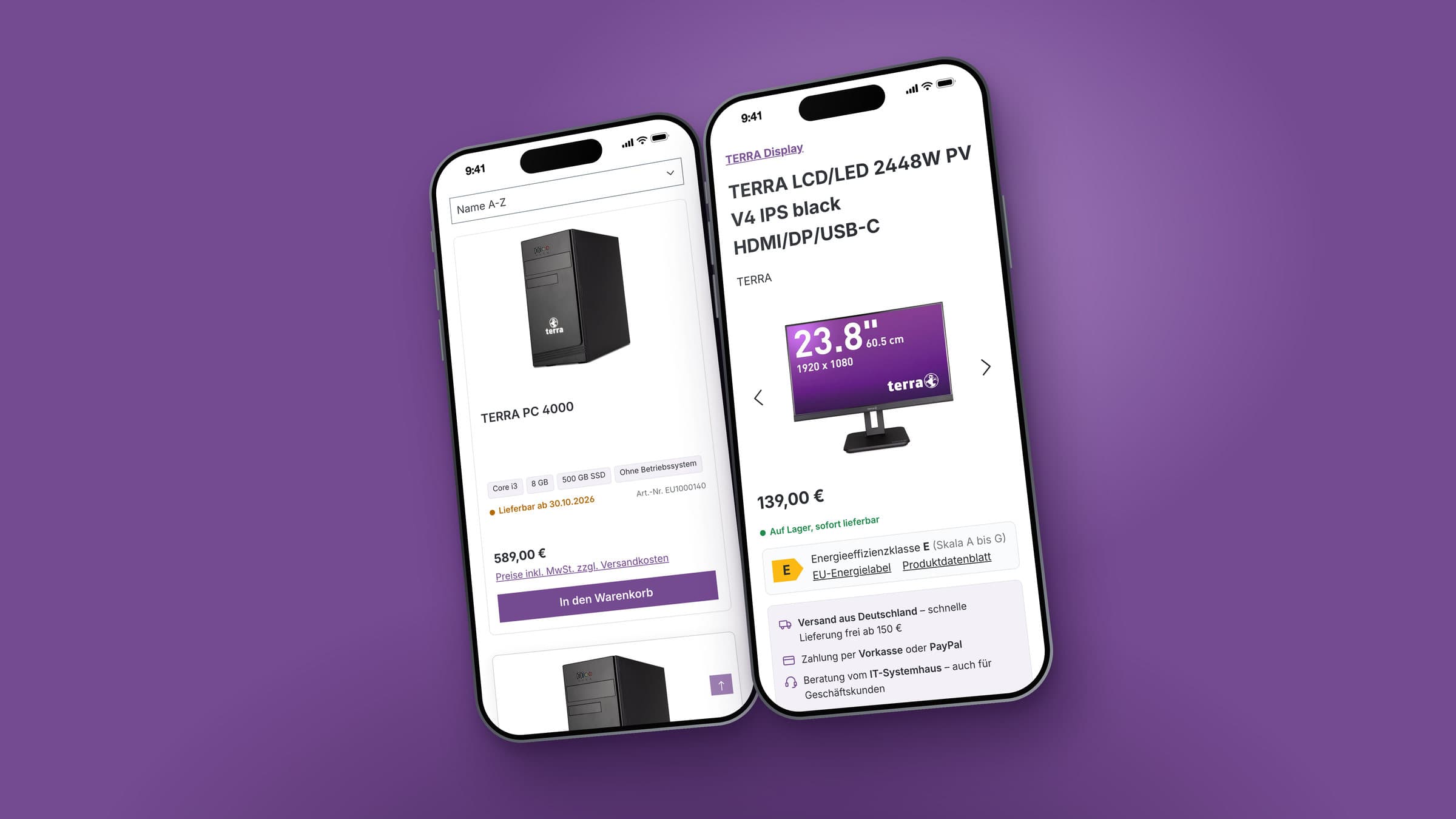
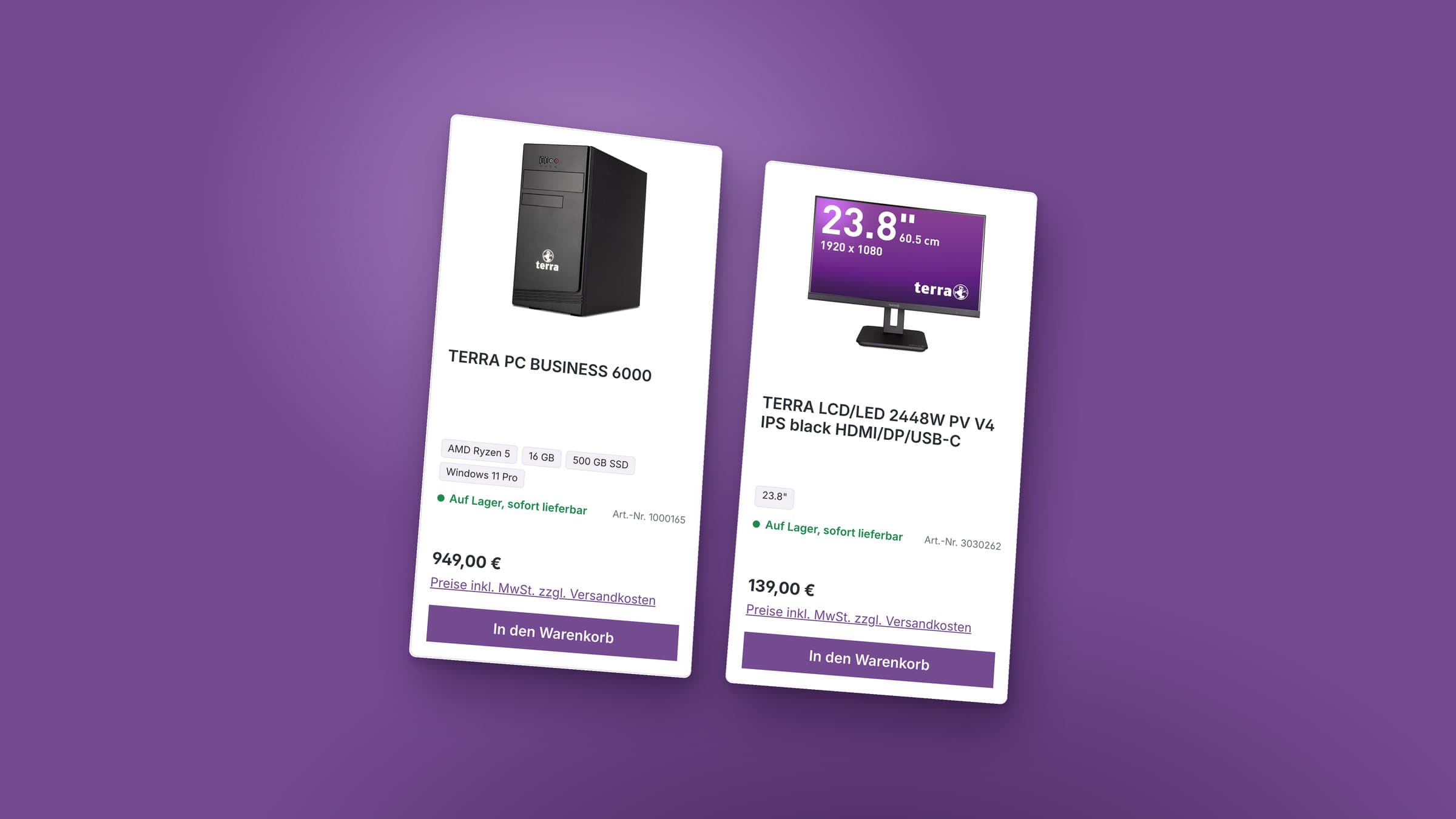
The same data appears as chips on the product tiles. Anyone browsing a category can see processor, memory and SSD without opening the product page.
Changing the shop system means carrying over addresses, measurement and mandatory information that grew in the old system over years. If one of them goes missing, it rarely shows on the first day.
Magento ended addresses in .html, Shopware works with paths. Just over 300 old addresses therefore redirect deliberately: to their new counterpart where one exists, otherwise to the matching category, and only in exceptional cases to the home page. That keeps rankings and bookmarks intact.
With measurement, the trap lies in the tag manager. The existing Google Ads conversions were waiting for events in the format of the old shop. The new one sends them alongside the GA4 format, so purchases keep being counted. For monitors, the EU also requires the energy efficiency class next to the price and an accessible product information sheet. Class, label and sheet come from the manufacturer data and the EU product database EPREL.
Write to us or book an initial consultation directly. We reply within 24 hours, usually faster on weekdays.