

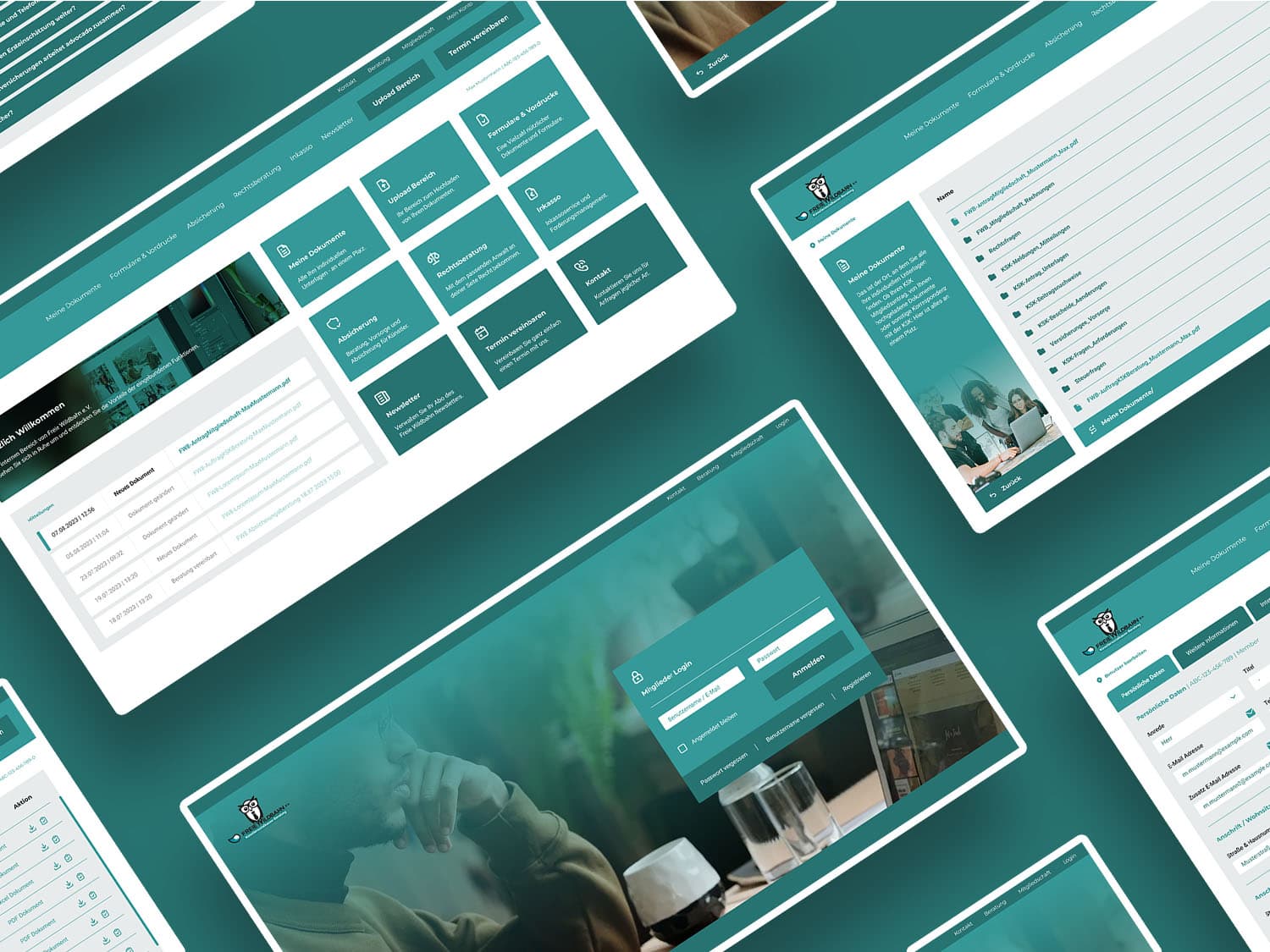
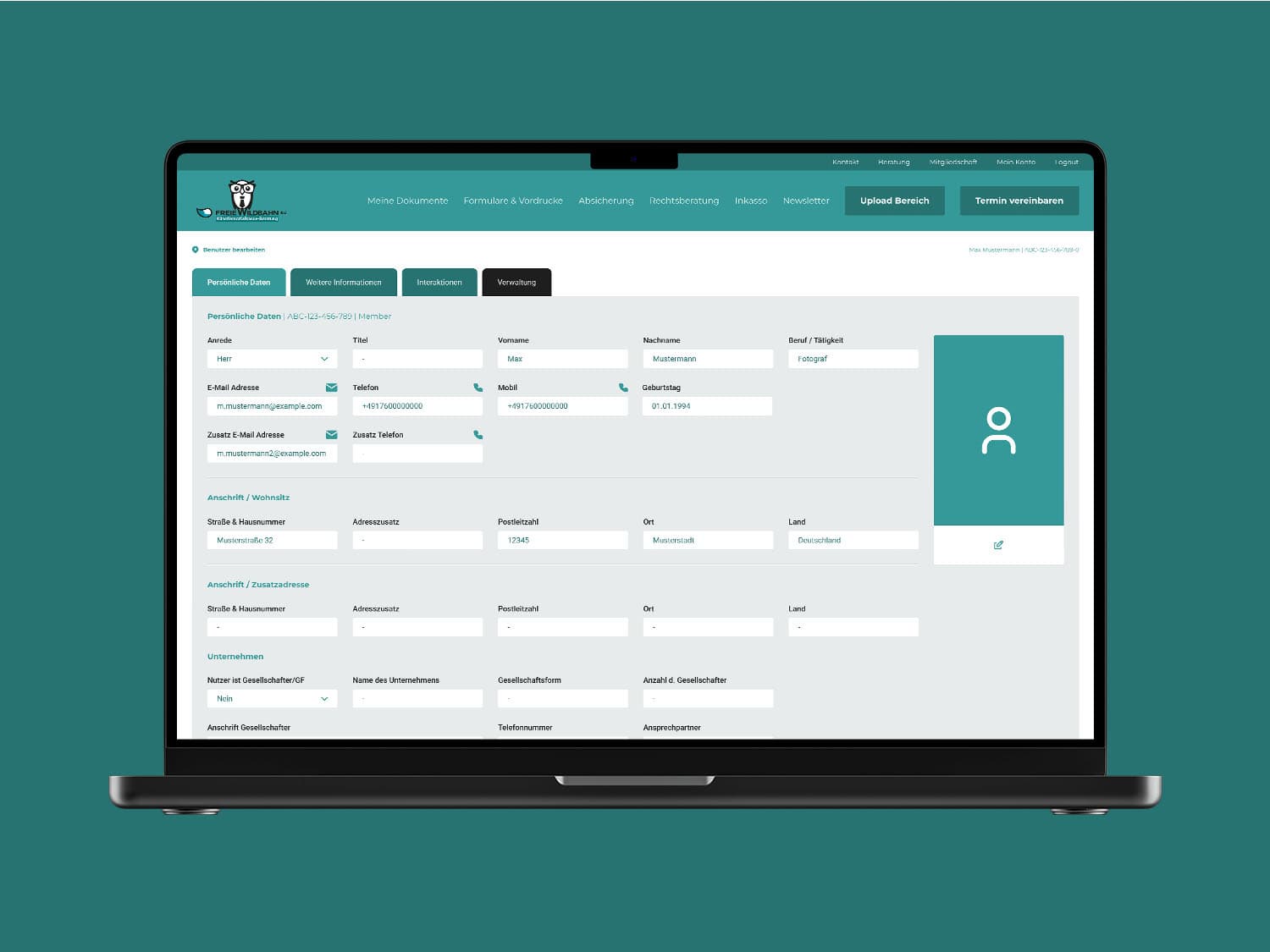

Freie Wildbahn e.V. specializes in KSK consulting. For the association, we developed a custom user management system. The concept phase began with a screen design closely oriented to the required functions. Development then started from this blueprint and integrated features such as OCR and automated document management.
The priority was functionality, both for customers of Freie Wildbahn and for administrative users. The result is a data- and function-based application that can manage several thousand customers and their data.
Intelligent and automatic text recognition (OCR) plays an important role in this process chain.
A system that manages members' applications, documents and data is first of all a data problem. The application form is only the entry point. What follows are continuing cases: evidence is added, details change, payments repeat, and every one of these steps has to stay attached to the right member.
Freie Wildbahn e.V. specializes in KSK consulting. Advisory work of this kind means documents are not merely stored, they have to be understood in substance. That raises the demands on structure. A document is then not an attachment but a record with a type, a time reference and a state.
On top of that, two very different groups use the same application. Members use it occasionally and mostly without prior knowledge, while the administration works in it every day. Functionality for both sides was therefore the priority. What one group needs as guidance, the other needs as overview and speed.
The concept phase began with a screen design closely oriented to the required functions. For data driven applications that is the order of work that holds. The draft first settles which objects exist, which states they can take and which role has which access. Only after that does the look of a view get decided.
The platform guides members through the application with a digital signature and handles SEPA and card payments via Stripe. An application that completes signature and payment in a single run avoids the detour over paper and follow up questions. For the administration it produces a case that is complete from the start.
On this basis, development integrated features such as OCR and automated document management. Intelligent, automatic text recognition plays an important role in this process chain, because submitted documents would otherwise have to be read and transferred by hand. Statistics dashboards give the administration the view of the whole that individual cases alone do not provide.
Applications of this kind grow. New document types, changed procedures and additional evaluations arrive during operation. Whether that is easy or laborious is decided by the data model, not by the interface. Where documents, cases and people are kept apart cleanly, extensions can be added without touching existing data.
With automatic text recognition, handling uncertainty belongs in the design from the start. Recognition is never fully reliable, so there has to be a defined path for cases that need review. A system that only knows the normal case pushes the exception back into manual work.
Roles and permissions matter just as much. As soon as several people work administratively, it has to be settled who may view, change and approve, and every change has to remain traceable. That the system is now in its second generation is characteristic of this class of work. Platforms like this are not finished, they are developed further.
Write to us or book an initial consultation directly. We reply within 24 hours, usually faster on weekdays.