
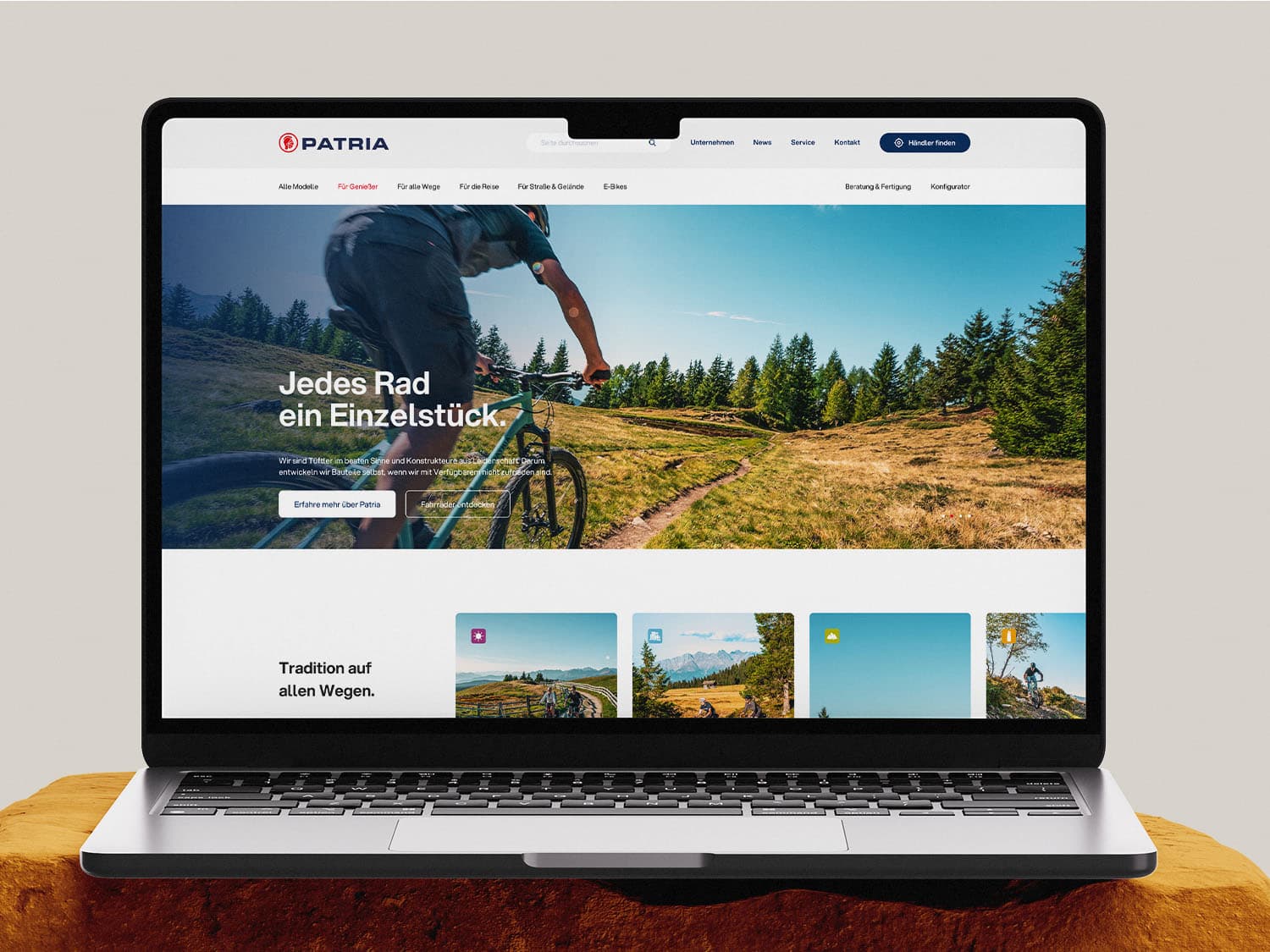

We were commissioned to create a new web presence for the German bicycle manufacturer PATRIA. Based in East Westphalia, PATRIA is proud of its long history of manufacturing custom bicycles in limited quantities.
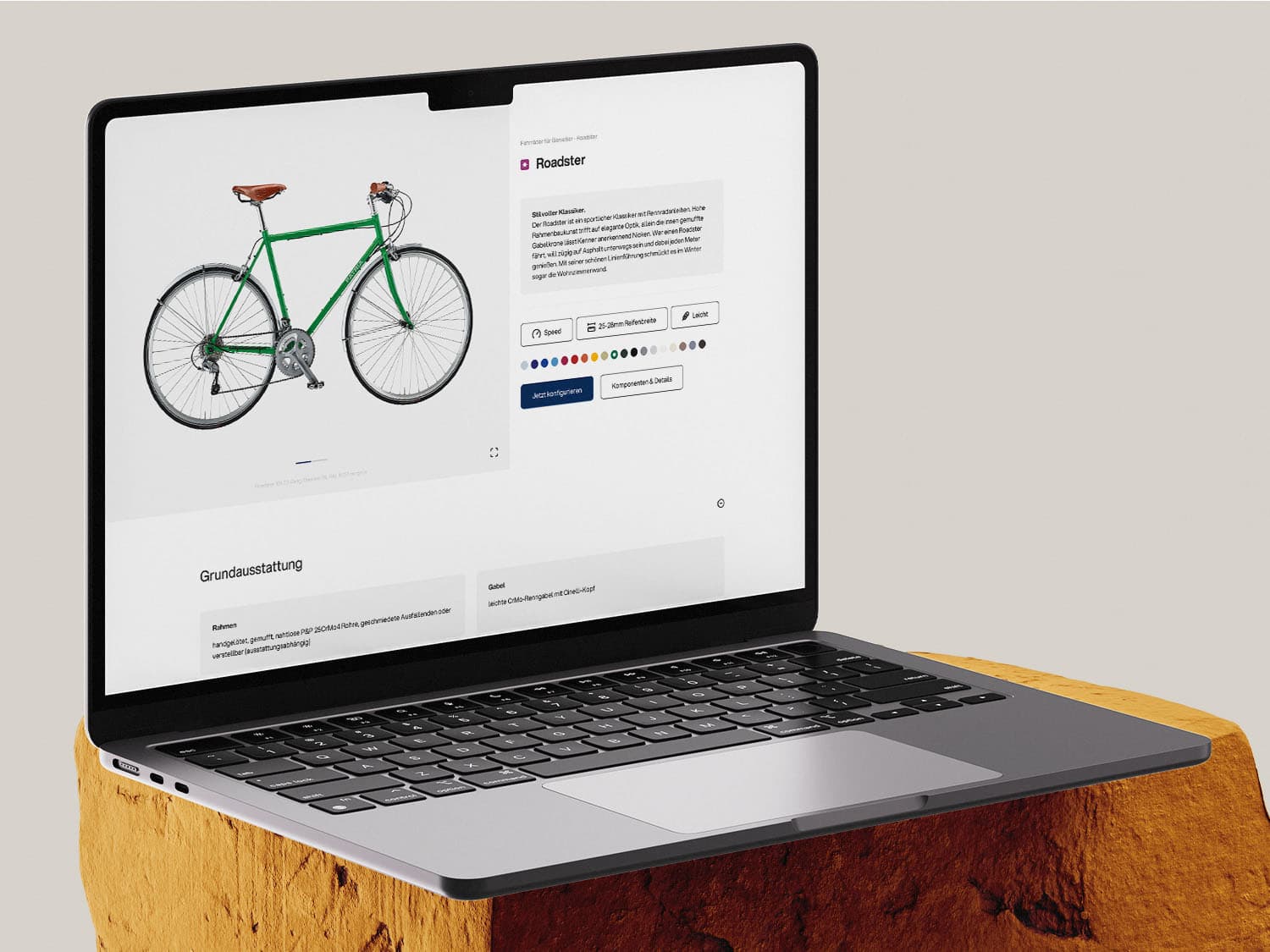
The new website highlights PATRIA's capabilities and offerings. Potential customers can find details about their desired bicycle; the history and craftsmanship of the specialists at PATRIA also have their place in the web experience.
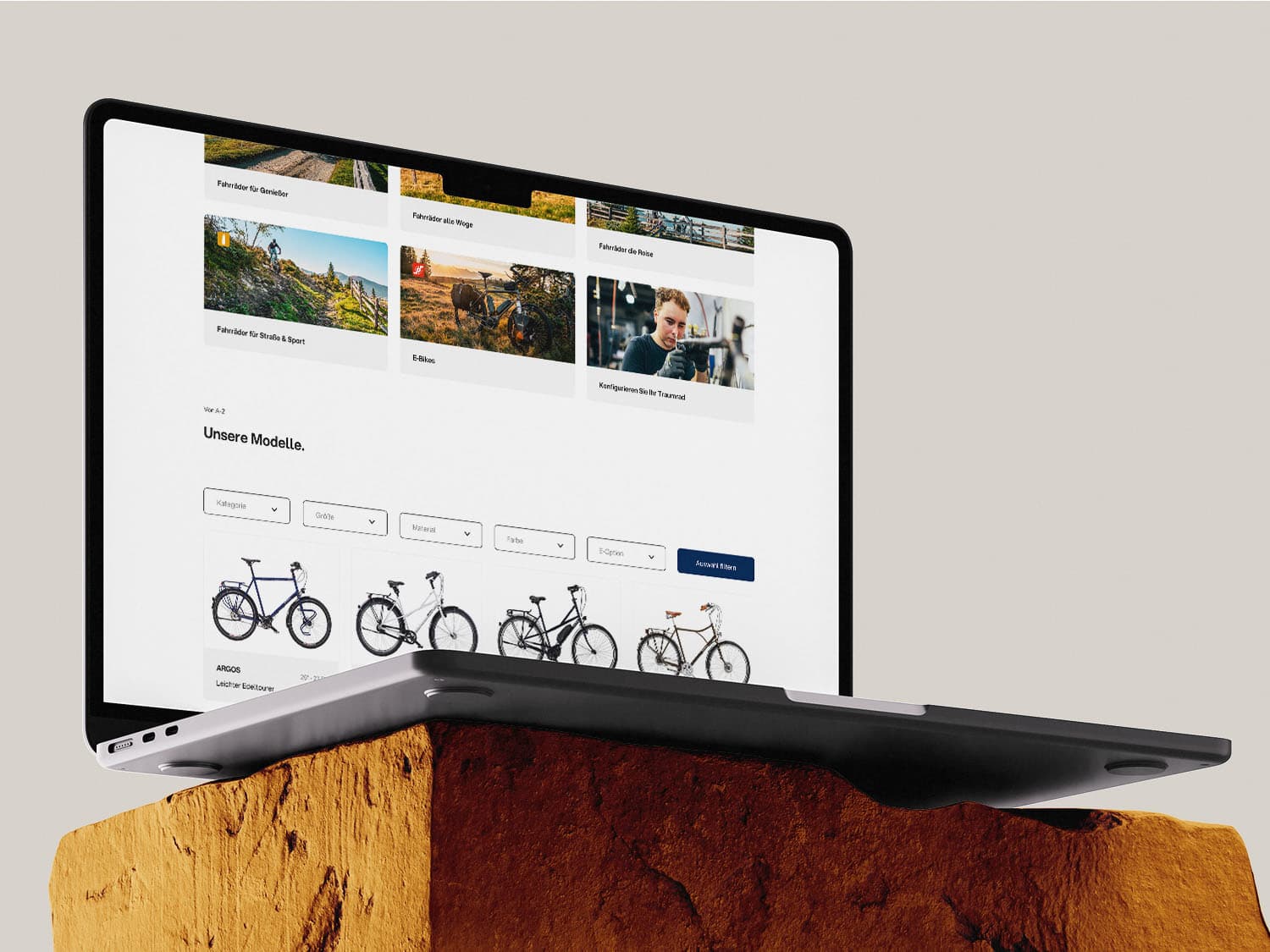
Presenting the various details of the areas of application as well as the individual models in a clear and appealing way was a main focus.
The new website covers the PATRIA brand's entire range and more than 100 years of experience.
A bicycle manufacturer building custom bikes in limited quantities puts a website in a different position than a catalogue retailer. Models rarely differ in a single property. The differences are spread across frame geometry, equipment options and the purpose a bike is meant for. Someone looking for a touring bike judges by other criteria than someone who needs a bike for short everyday trips.
That creates a double requirement. The full range has to be visible without visitors losing the thread, and at the same time every single model needs enough explanation for a first shortlist. Balancing the two was a main focus for PATRIA: areas of application and model details were meant to sit next to each other, clearly arranged and appealing.
On top of that, production in small quantities and a long manufacturing history are part of the offer themselves. A website that only lists product data leaves out exactly the part that carries the buying decision in this segment.
The site opens up the range through two routes: the areas of application, meaning the question of what a bike is needed for, and the individual models with their details. In ranges that need explaining, this separation holds up because it serves two different search attitudes. Visitors who know their goal go straight to the model. Visitors who are still undecided start with the intended use and are guided on from there.
For the model presentation this means depth cannot come first. A model page works when it conveys character and use before handing over the technical properties in a comparable form. Comparable means the same order, the same wording and the same level of detail across all models. As soon as that order becomes inconsistent, the models start to look as if they could not be weighed against each other at all.
Next to the range, the history and the craftsmanship of the specialists have a place of their own in the web presence. They do not sit alongside as decoration. They explain why a bike is built the way it is built.
The decisions taken early in projects like this almost always concern the data structure. Which property belongs to the model, which to the equipment, which to the area of application? Without a clean separation, content is duplicated as soon as a model appears in several contexts, and every later change has to be repeated in several places.
Equally early is the question of how far the site should guide the selection. A curated overview built around intended use and character suits ranges where advice remains part of the purchase. The more finely the selection can be configured in advance, the more maintenance it creates, and the more likely the conversation moves away from the manufacturer.
After launch, what carries the site is how easily models can be added, replaced or retired. A range of this kind changes in steps. The structure has to absorb that movement without a new decision about layout and imagery every time.
Write to us or book an initial consultation directly. We reply within 24 hours, usually faster on weekdays.