
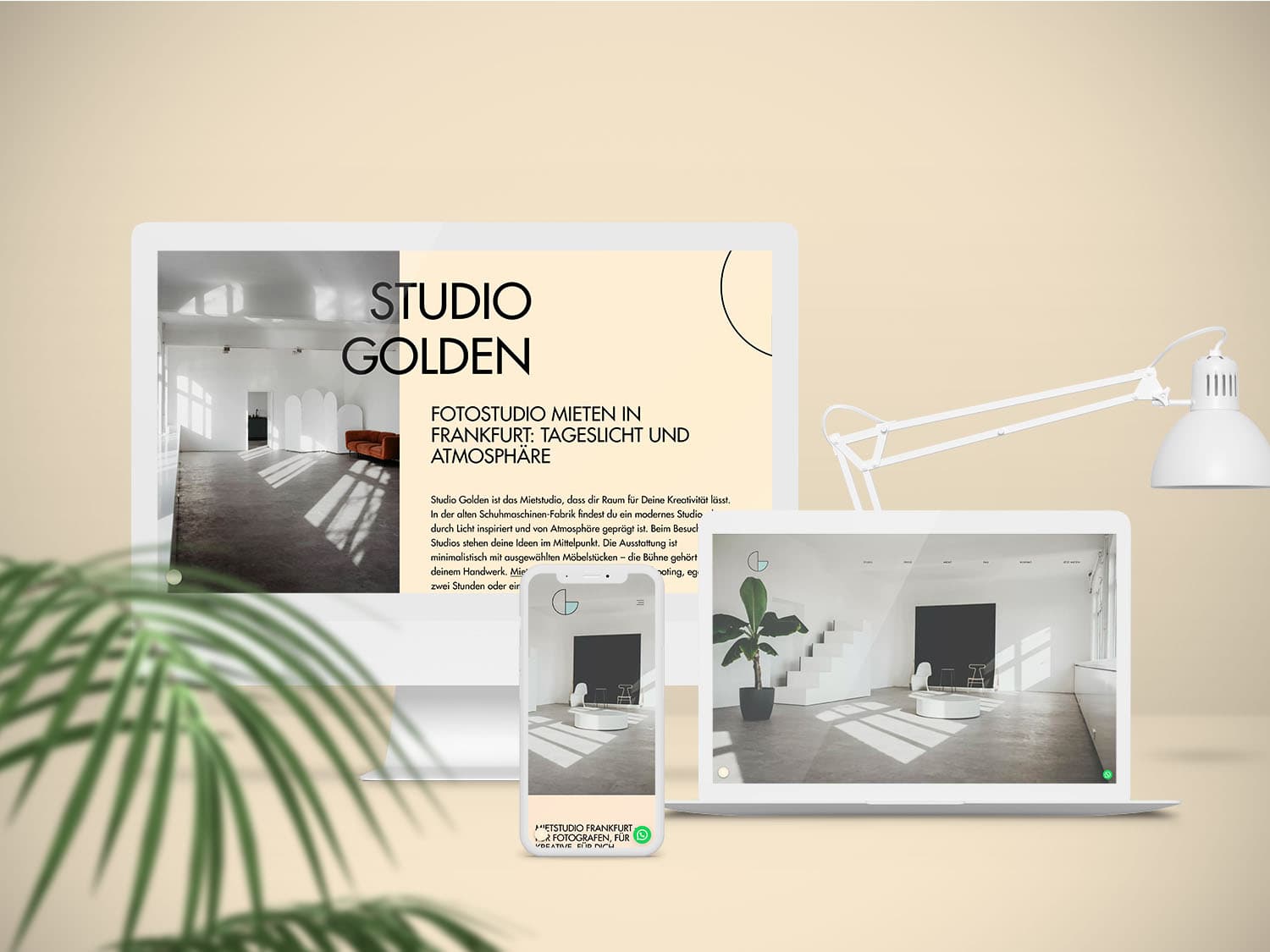
KOMMERS develops websites for photographers and creatives, for example to present a portfolio or showcase spaces. On request, we integrate extensions for appointment booking and detailed contact requests, covering both the technical and the design side.
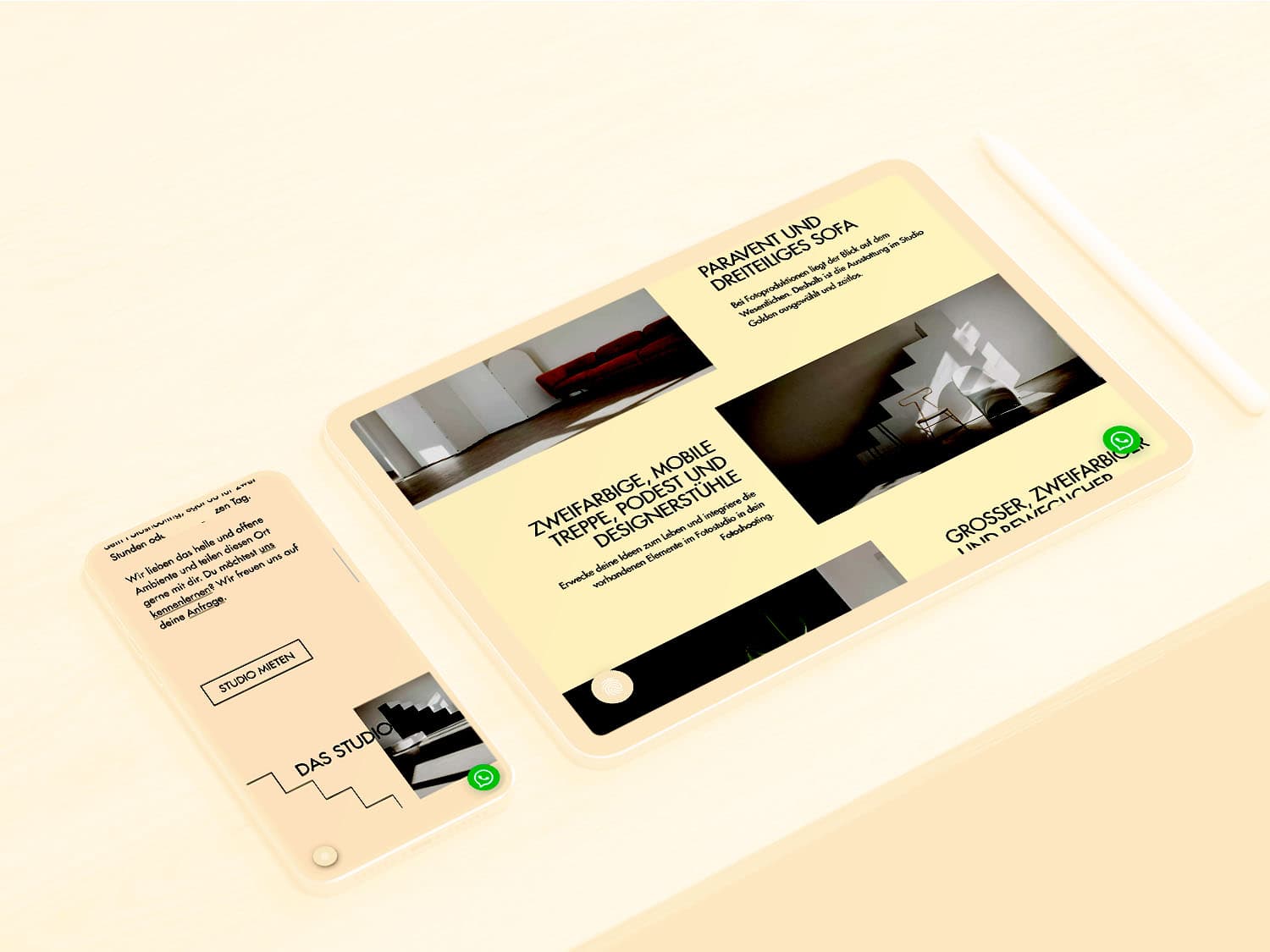
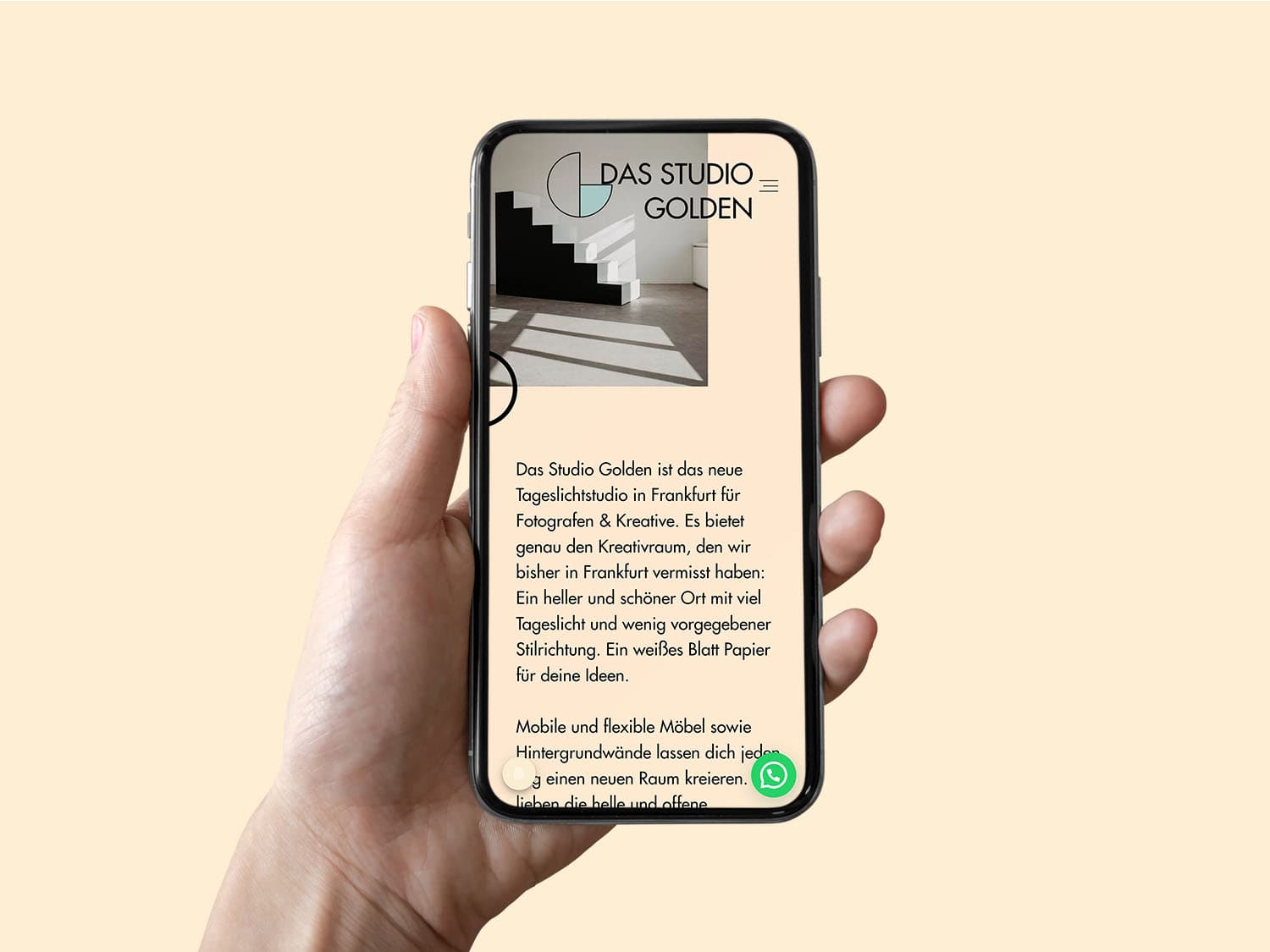
The website focuses on the studio's diverse uses and on answering as many questions as possible in advance. This allows the studio's operators, who are creatives themselves, to concentrate on their work and offer their studio to other creatives with little effort. The studio's special flair was incorporated into the design, both in the desktop and the mobile version.
For booking the studio, we integrated a booking plugin. Visitors can book the studio for their project directly on the website, without prior contact.
A rental studio does not sell an object. It sells a block of time in a particular room, and anyone booking it decides in advance whether that room suits the job. What follows is a long list of questions that come up before any enquiry is sent: how the space is laid out, how you get in, what is already there, what you have to bring yourself, how the rental is handled.
When a website leaves those questions open, they end up in an inbox. Every enquiry then costs a reply, and some of that correspondence never turns into a booking at all. For a studio whose operators are creatives themselves, that is the point where letting the room starts to shape the working day.
So the task was less about presentation than about completeness: setting out what the studio can be used for clearly enough that people can judge for themselves before they get in touch.
A booking plugin is integrated into the site for renting the studio. The difference between that and a contact form is larger than it first appears. A form produces an enquiry that somebody has to read, check and answer. A booking produces an appointment. Control over dates moves out of email correspondence and into a calendar that is visible on the website.
That shift comes with requirements. Availability has to be accurate, otherwise double bookings appear. Rental times, setup and takedown, and the conditions attached to a booking belong where the booking happens, not on some other page.
The technical implementation followed the specifications of the agency responsible for the design. The studio's particular character was carried into both the desktop and the mobile version, which is no side issue for a room that is let on atmosphere: for many people the website is the first impression of the space.
With websites for rented spaces, how much day-to-day work the site creates is decided early. Hint at the conditions and the clarification moves into correspondence. Spell them out and you may lose the odd enquiry, but the bookings that arrive come from people who know what they are agreeing to.
The second point is images. A room is judged on pictures, and on a lot of them. That creates file volumes that have to be prepared properly so the site stays usable on a phone. Mobile is not a special case here, it is the normal case.
The third point is upkeep. A booking system is only as reliable as the calendar behind it. As soon as dates can also be agreed by other routes, there has to be a rule about which source takes precedence. And the questions that still arrive by email belong back on the website. Otherwise the answering workload builds up again with every season.
Write to us or book an initial consultation directly. We reply within 24 hours, usually faster on weekdays.