
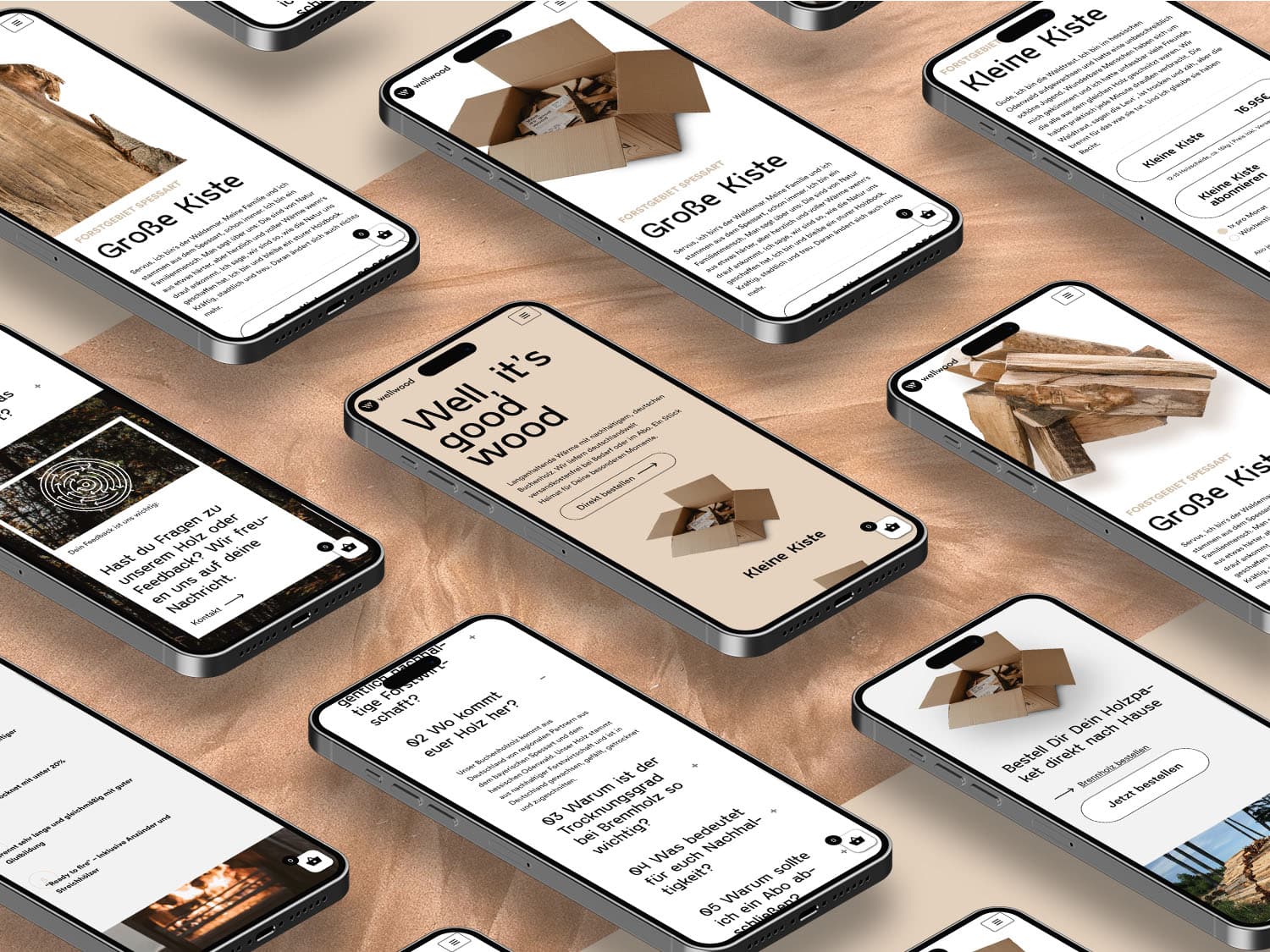
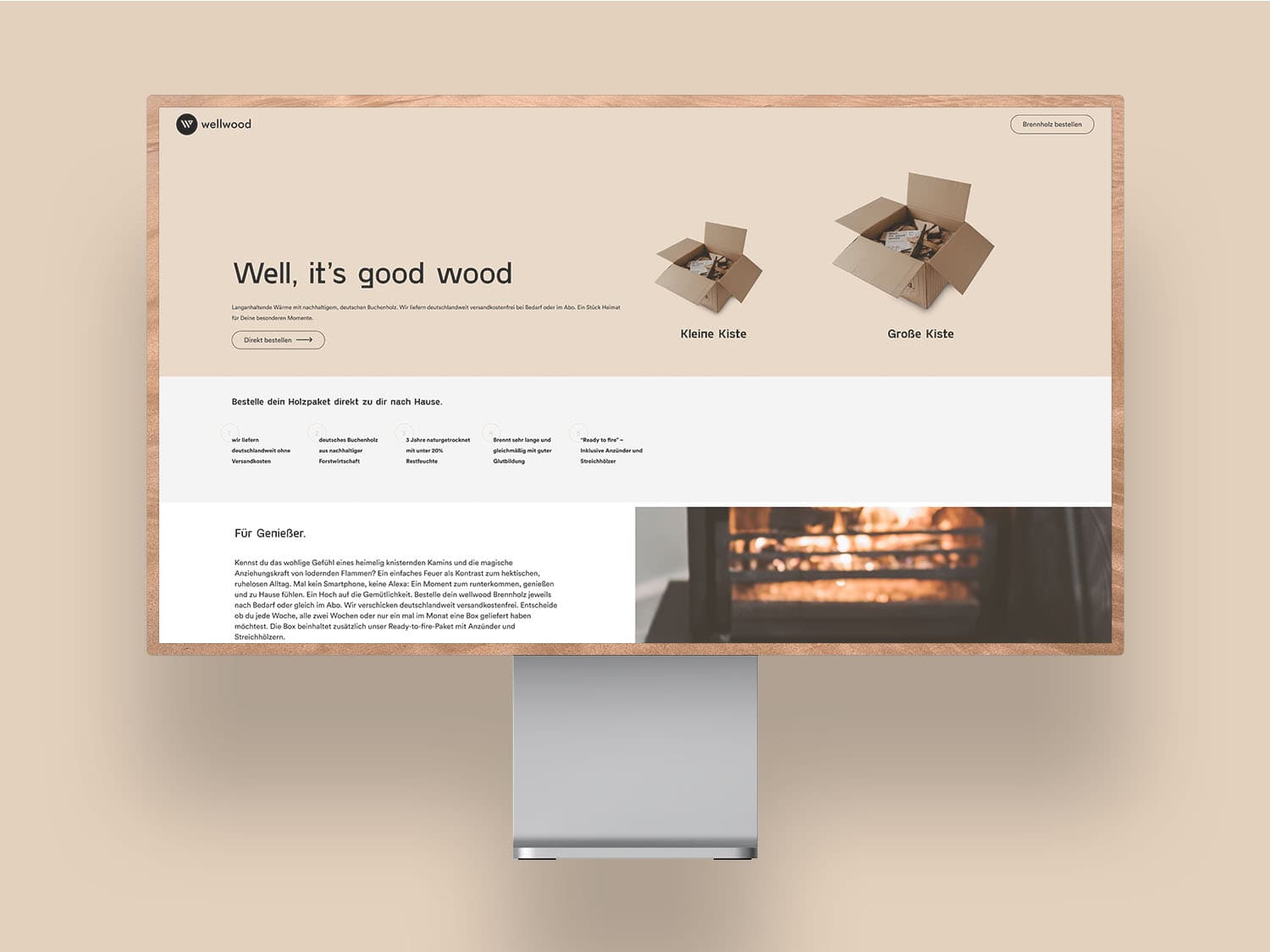
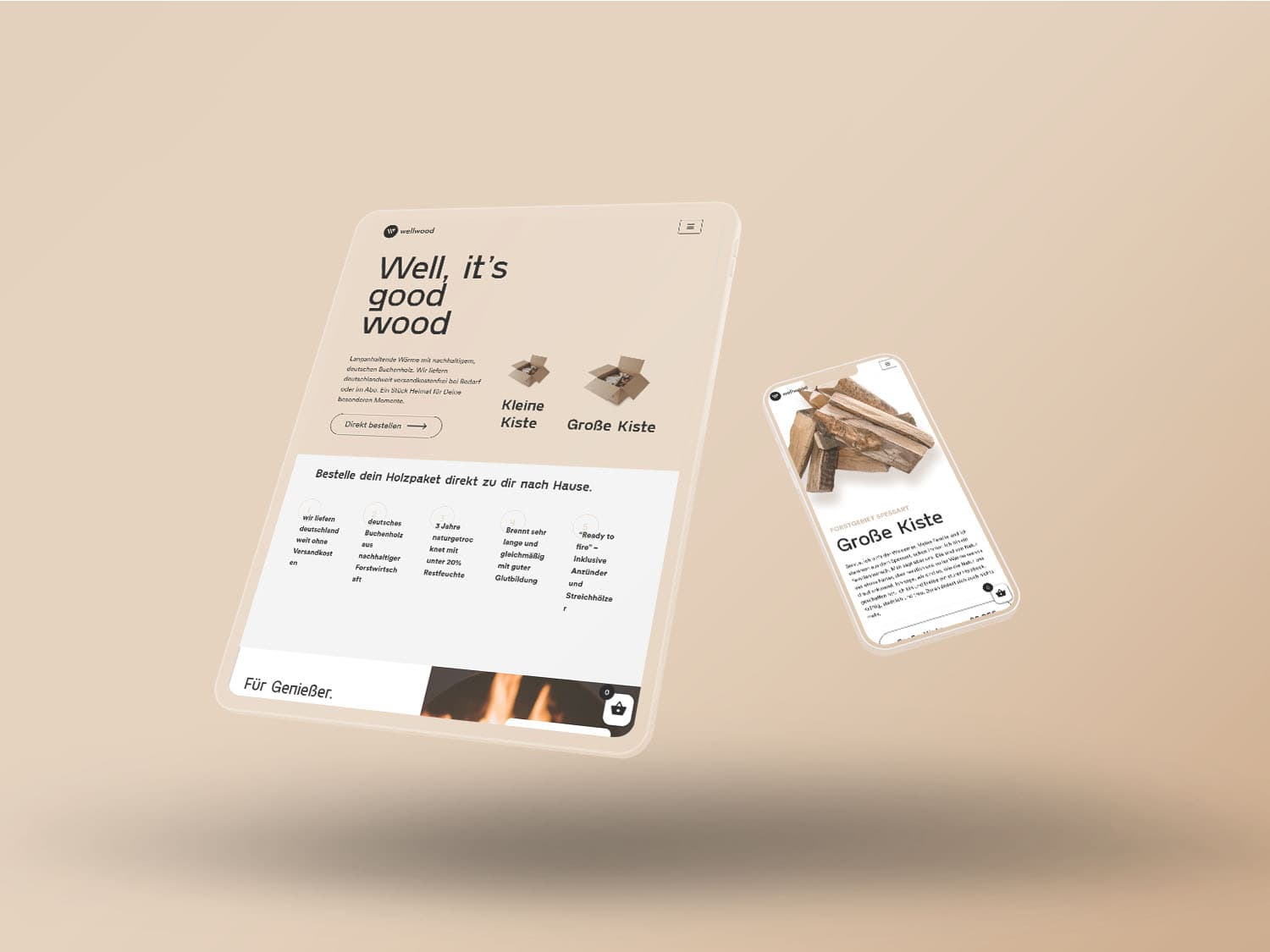
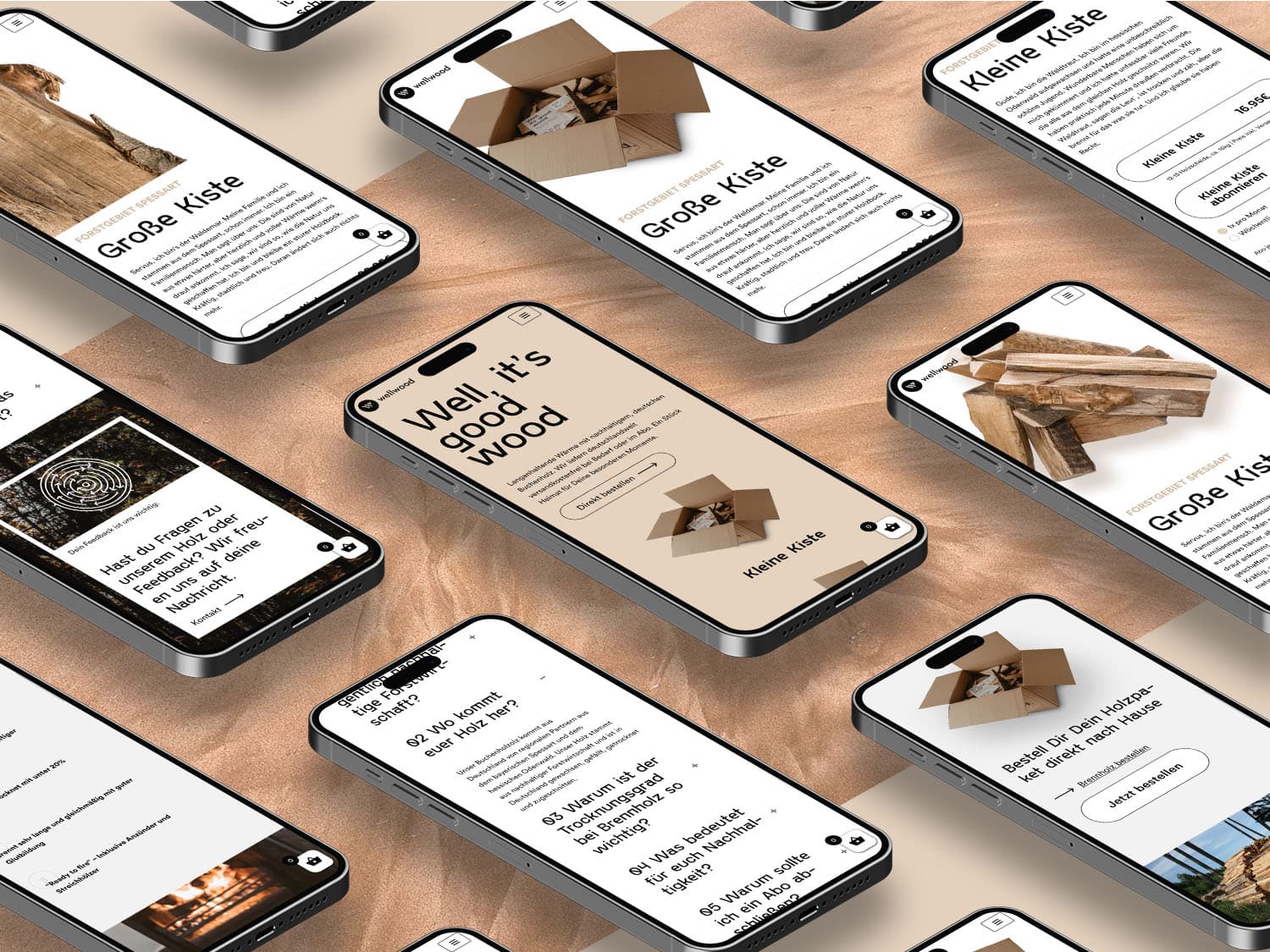
Wellwood delivers throughout Germany free of shipping costs, on demand or by subscription. The technical basis for this is an e-commerce solution by KOMMERS.
The priority was a clear ordering process and simple user guidance, so that customers can get to their firewood quickly.
The e-commerce solution for Wellwood: a shop system with numerous functions.
Firewood is heavy, bulky and comparatively low in value per kilogram. In online retail that is an awkward combination, because shipping becomes part of the calculation. This is exactly what ready-packed boxes address: instead of loose quantities customers have to estimate themselves, there is a defined unit with a known weight, a known volume and a known shipping route.
That decision reaches into the product structure of the shop. A range built from clearly cut packages can be presented differently from one with freely chosen quantities. The selection gets shorter, pricing becomes unambiguous, and the shipping rules stay manageable.
Then there is the rhythm of the purchase. Firewood is not bought once, it is bought again, and demand spreads across the heating season. A shop for this kind of product has to serve the one-off order and the recurring subscription delivery at the same time, without customers having to learn two separate routes through the site.
The ordering process was the core of the task: customers should get to their firewood quickly. With a manageable range, that mainly means leaving out intermediate steps. The fewer decisions there are between the product page and the completed order, the less often somebody abandons it out of uncertainty.
Delivery is free of shipping costs throughout Germany. That is not only a commercial condition, it also simplifies the user journey: the price on the product page is the price that gets paid. Shipping costs that only appear late in checkout are a classic reason for abandoned baskets, and that reason is gone.
The subscription places additional demands on the shop system. A recurring order has to be manageable, and manageable by customers themselves: change the address, adjust the interval, pause it, end it. Leave that out and every one of those changes lands in customer service, in a model that lives on the relationship lasting.
A shop for heavy delivered goods is not used evenly. Demand follows the heating season and the weather, so the shop has to work in weeks of high demand just as it does in summer. That applies to the technology, but above all to the processes behind it, from picking to communicating delivery times.
Second, expectations around delivery are a subject in their own right. With bulky goods, buyers want to know how the delivery arrives and what is expected of them on the day. If that is not on the website, the question comes by email or phone, and it comes again with every order.
Third, a subscription model needs attention well beyond launch. Recurring orders keep running in the background, payments can fail, addresses change. A shop system that handles those cases cleanly and makes them visible stops a quiet failure from turning into a lost customer.
Write to us or book an initial consultation directly. We reply within 24 hours, usually faster on weekdays.