
KOMMERS builds websites for expert practices and advisory service providers, where the enquiry itself is the point of revenue. That includes multi-step forms that capture a case in full, status lookups for ongoing work, and measurement that stays reliable even though some visitors decline data processing.
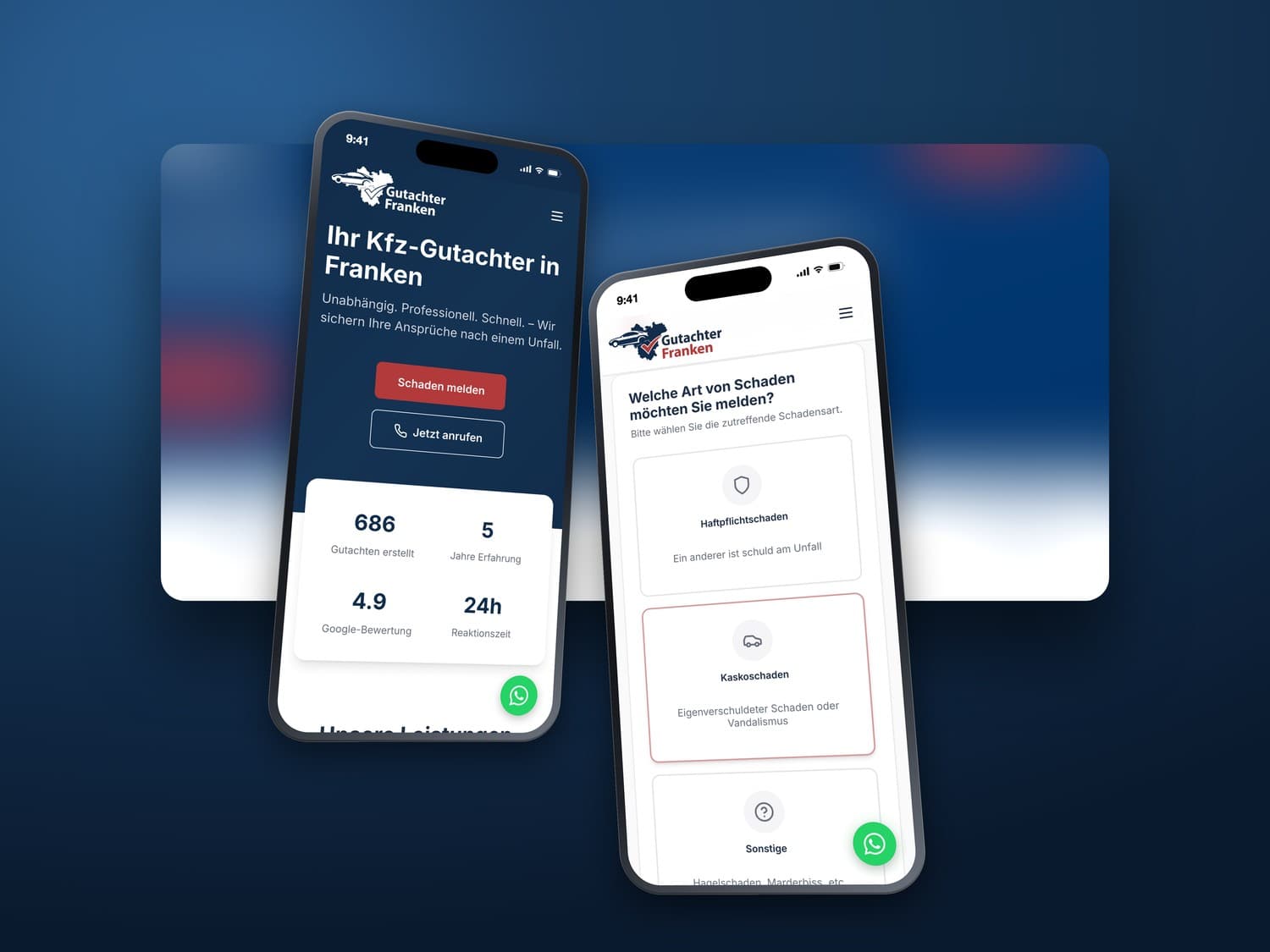
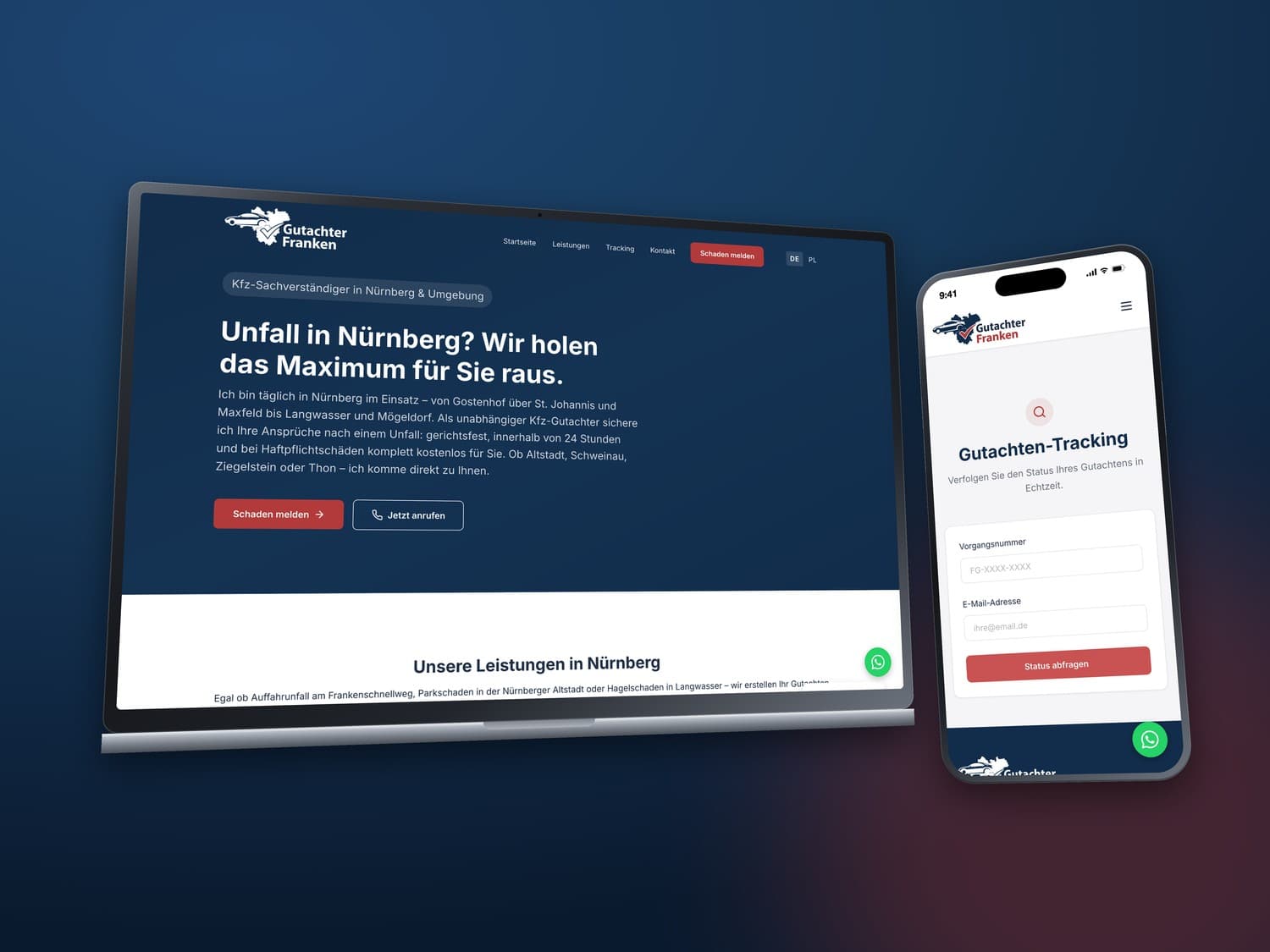
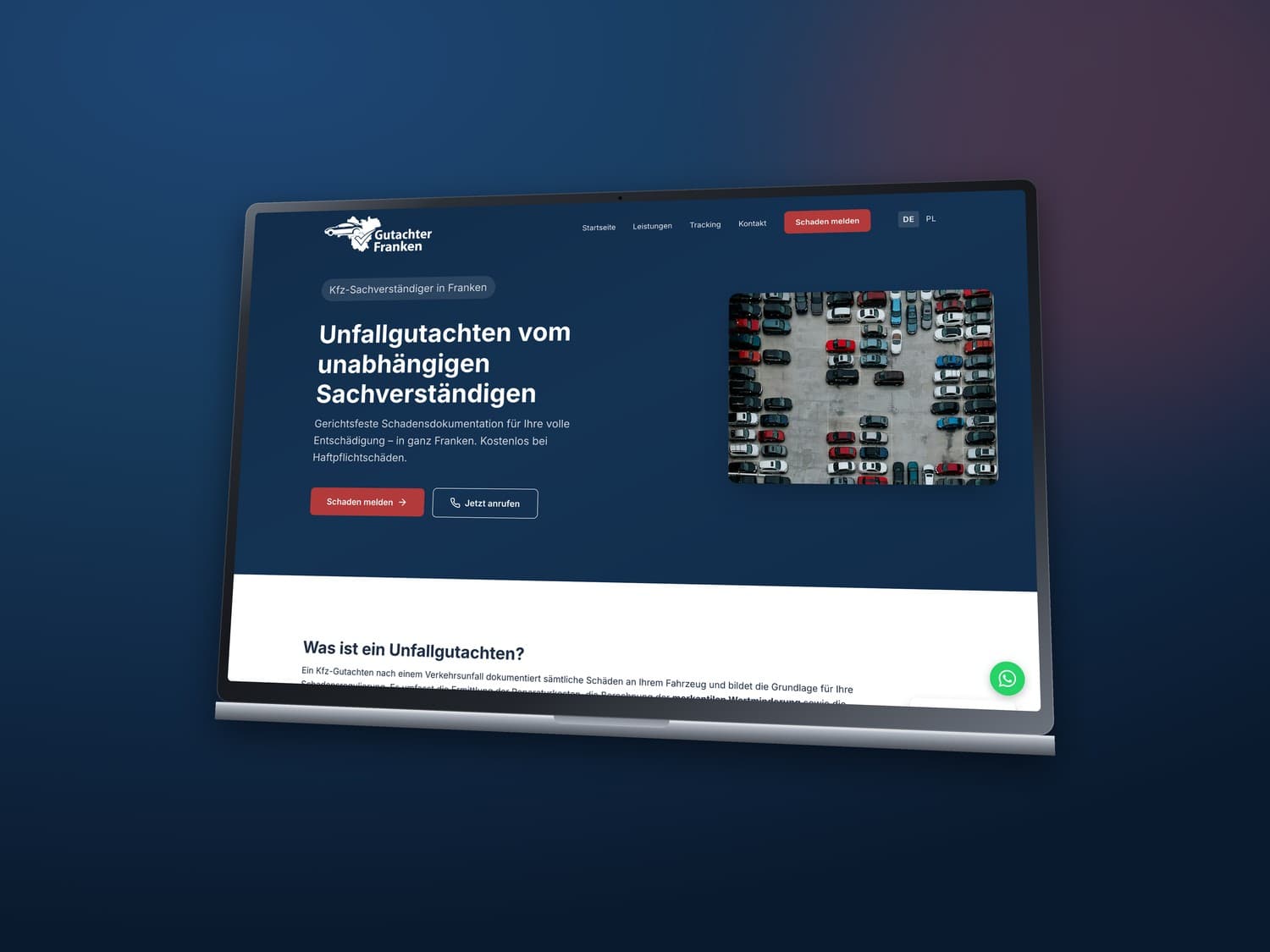
The focus was on the moment when someone starts looking for an assessor. That is rarely a calm moment at a desk – usually it is the evening after the accident, on a phone. So the home page answers the two questions that matter first: who pays for the report, and how long it takes. Each of the nine cities has its own page with districts, travel times and the accident hotspots of that area. This is not text variation; it is the difference between an enquiry from Bamberg and one from Roth.
The damage report guides users through eleven steps, from type of damage to contact details, vehicle data and photo upload, and issues a case number at the end. That number lets clients check the status of their report directly on the site. Every point of contact – form, phone, WhatsApp, email – is measured, but only after consent has been given.
After an accident that was not their fault, people in Germany may choose their own assessor, and the at-fault party's insurer covers the cost. This is settled case law. It is also almost unknown to anyone facing the situation for the first time.
For the website that means more than adding a sentence. Someone who believes they have to pay for the report themselves compares prices and ends up calling nobody. Someone who knows the other side pays looks for the assessor who can get there fastest. Those are two different visitors taking two different paths through the site.
So the site answers the cost question in the first screen rather than on a sub-page. The order of arguments follows that logic throughout: first who bears the cost, then how long it takes, then qualifications. Technical depth comes later, because it only matters once the first hurdle is gone.
A contact form collects a name, an email address and a message. Then the chasing begins: which vehicle, what damage, when did it happen, are there photos. Every one of those follow-ups costs a day, and with a third-party liability claim time is the only thing that counts – otherwise the other side's insurer sends its own assessor.
So the damage report captures the case in full. Eleven steps sounds like a lot, but each is a single decision: type of damage, contact, vehicle, description, photos. The photo upload early on carries the most leverage, because it makes it possible to judge in advance whether an on-site inspection is needed at all.
At the end there is a case number. It turns a submitted form into a process the client can follow, which replaces the calls that otherwise pile up between report and appointment.
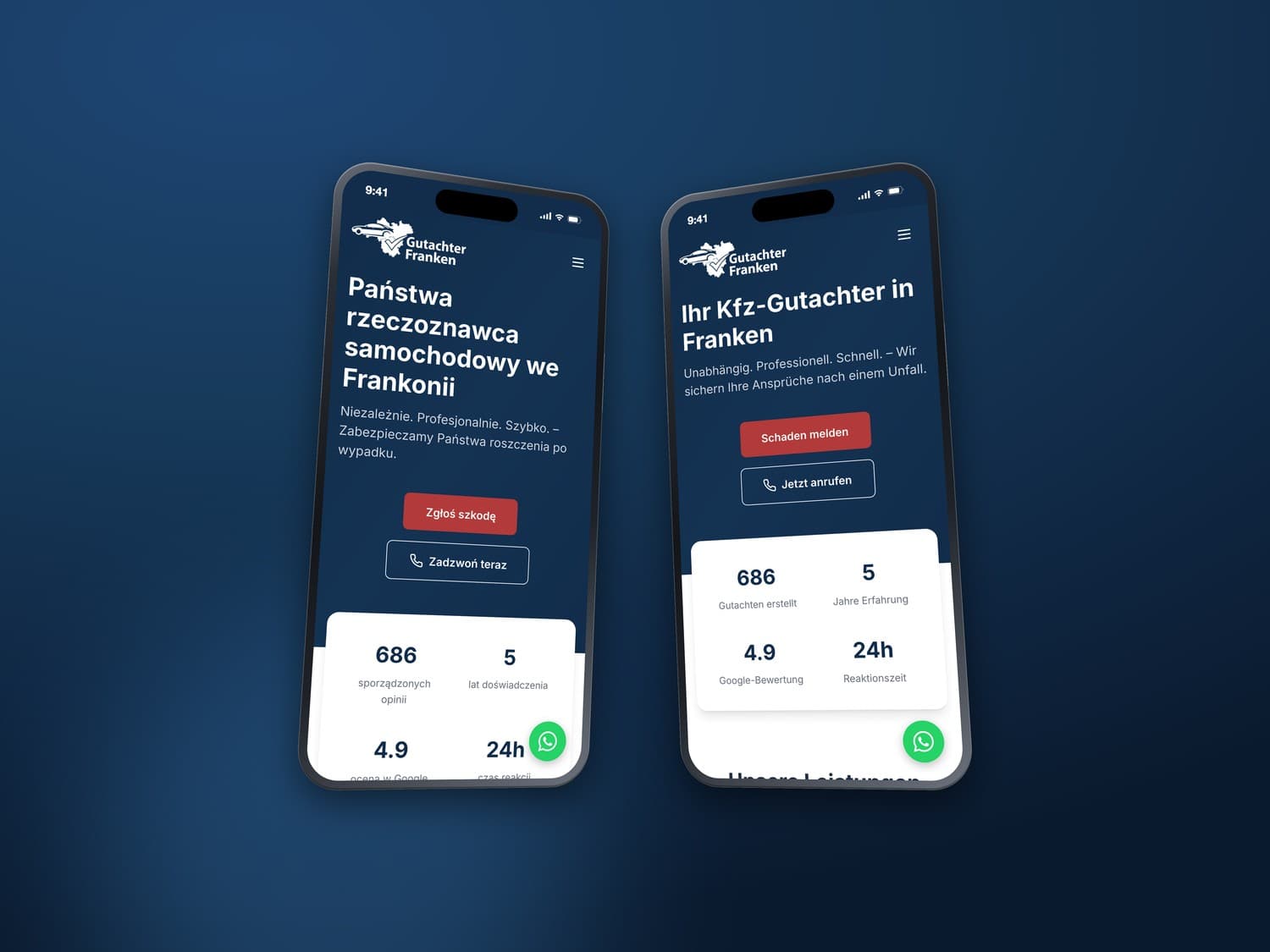
The site is published in German and Polish, because a substantial share of drivers in the region are Polish-speaking and need a report for a German insurer. The visible part of that work is translating the content. The demanding part is something else.
Translated pages get their own addresses. schaden-melden becomes zglos-szkode. Every place in the theme that identifies a page by its address therefore stops matching on the translated version – and does so silently. In the worst case the damage form no longer loads its JavaScript and cannot be used, without an error appearing anywhere. The same applies to hard-coded links in navigation and footer: they take visitors out of their own language.
The fix is to resolve every such condition through the source page rather than the address. After that, the same logic carries any further language without a second special case anywhere.
Write to us or book an initial consultation directly. We reply within 24 hours, usually faster on weekdays.